Common dolphin
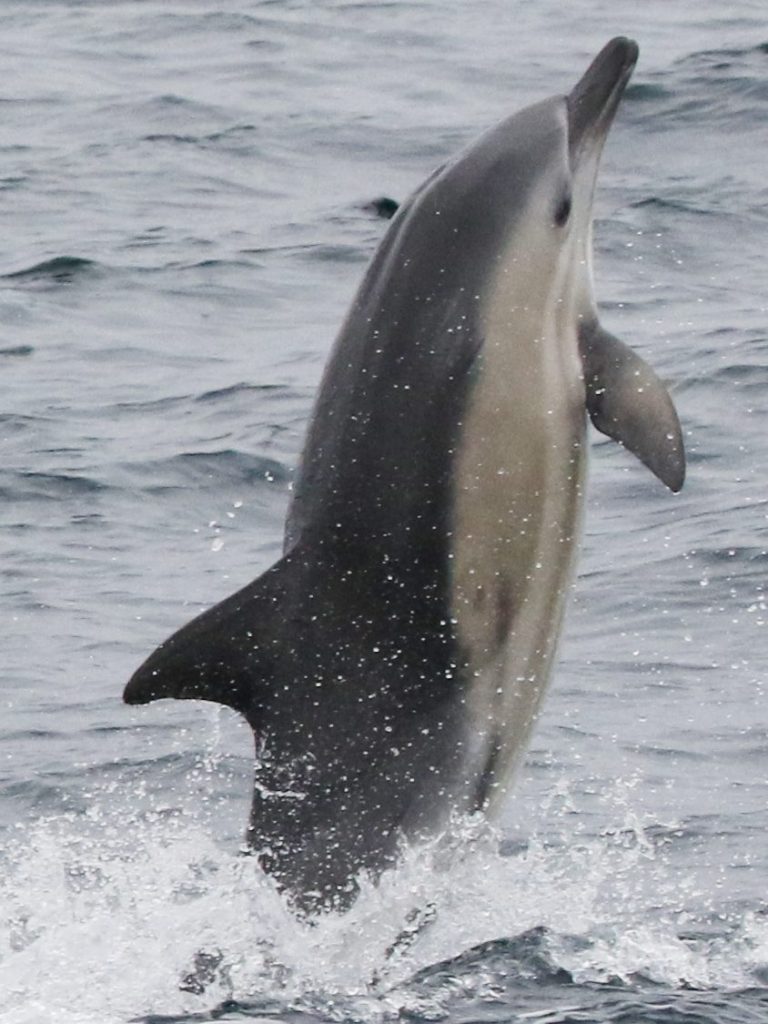
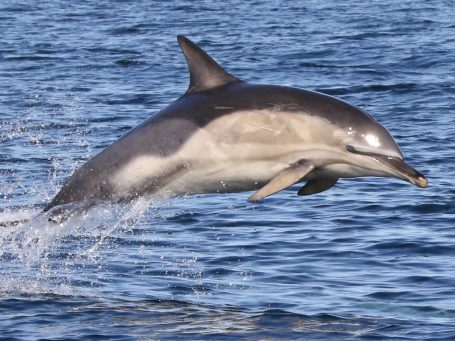
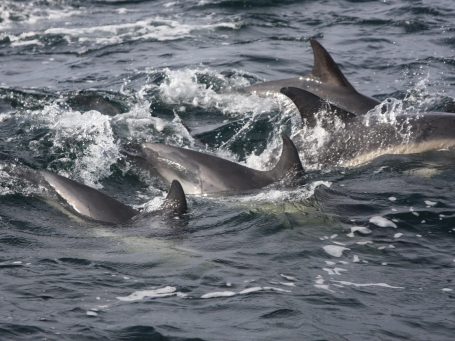
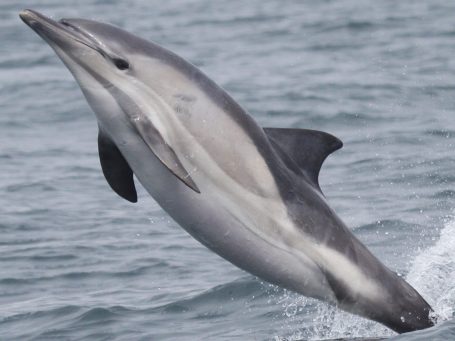
Historically, in the coastal waters of the west coast of Scotland, common dolphins (Delphinus delphis) were mostly absent with sightings only started to be recorded from approx. 2010 onwards. By 2014, they were being recorded in every month of the year. The species is more abundant in the summer months, with sightings peaking between May and October, when food is likely to be most abundant. Groups including mother and calf pairs are commonly encountered during boat-based whale and dolphin watching tours and research surveys, and the area has fast become what appears to be favourable, and preferred habitat for common dolphins. Understanding more about the common dolphins that are using these waters will help us to understand more about why they’ve changed their distribution, why these waters have become important to them and how we can ensure they receive the protection they deserve.
Photo-identification is a commonly used method to study population structure in cetacean species, however, to date, this methodology has not been used on common dolphins given the difficulty in obtaining good ‘dorsal fin’ photographs and the similarity between the dorsal fins of individuals. However, images collected to date show that some individuals may be staying in the area for extended periods of time and returning over multiple years, showing some form of site-fidelity.
In 2026, MARA aims to work with other local researchers and whale and dolphin watching tour operators to create the first-ever photo-id catalogue for common dolphins.
Watch this space!